

Dry sorbent injection technology relies heavily on particle size and material consistency. Finer, more consistent sorbent particles provide greater surface area, improve desulfurization efficiency, and help industrial facilities meet stricter air quality control requirements. Classifier Milling Systems (CMS) focuses on the milling and classification processes that make that performance possible.
About CMS Sorbent Technology
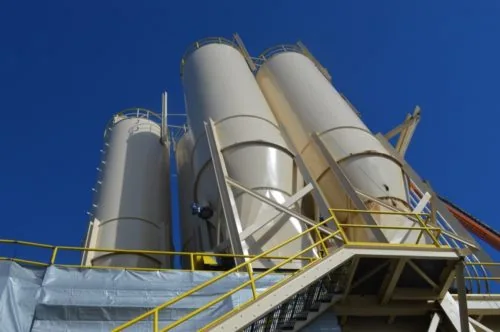
Dry sorbent injection (DSI) is an air quality control method that removes acid gases from flue gas streams. It targets primary pollutants like SO2, SO3, and HCl, plus marginal pollutants such as HF, Hg, PM10, PM2.5, H2S, and H2SO4.
- Proven performance: meets international environmental regulations
- Primary pollutants captured: SO2, SO3, HCl
- Marginal pollutants captured: HF, Hg, PM10, PM2.5, H2S, H2SO4
- Low comparative capital cost
- Integrates with existing emissions control technologies
- Reduced impact on ash handling and waste disposal
Size reduction milling is central to DSI performance. The sorbent reacts with pollutants in the flue gas stream during a narrow residence time within a target temperature window. Particle size directly determines the available surface area for that reaction. Finer particles mean greater contact area and higher pollutant capture per unit of sorbent injected.
This is the gap that Classifier Milling Systems bridges. We engineer milling systems that control particle size, moisture, and material consistency to improve sorbent performance in dry sorbent injection applications.
CMS engineered and constructed the SOLVAir® sorbent production facility for Solvay Chemical at Owensboro Riverport, Kentucky — one of the largest sorbent production facilities in the United States. The facility supplies sorbent to a regional coal-fired baseload power generation station.
The system produces SOLVAir® SBC at 6 MT/hour at <20µm d90.
Using Sorbent Technology to Improve Operations
The right milling system turns DSI from a compliance checkbox into an operational advantage. Our particle size reduction equipment gives you control over the variables that matter most.
What that control delivers:
- Higher capture efficiency: Finer sorbent reaches more pollutant molecules, so you remove more SO2, SO3, and HCl per pound of material.
- Lower reagent costs: Better-performing sorbent means you inject less of it to meet the same target.
- Moisture control and chemical stability: CMS milling systems are engineered to control moisture levels during size reduction, preserving sorbent reactivity and ensuring consistent performance across production runs and storage conditions.
- Regulatory compliance: Consistent particle size and sorbent performance support compliance with international emissions standards, including EPA requirements for the reduction of SO2, SO3, and HCl.
These performance gains matter across the primary industries where DSI is used. Cement and lime producers, coal-fired power generators, and industrial burners all operate under tightening emissions limits and need consistent sorbent performance to manage compliance costs.
Our experience in the chemical sector runs deep. We design and manufacture attrition grinding mills for injection sorbents and other industrial chemicals used by Fortune 500 companies.
The CMS Air Swept Classifier Mill anchors much of this work. It combines high-speed impact grinding and air classification in a single chamber, producing the fine, uniform powders that DSI demands at high volume. Our systems span 5 to 600 horsepower, so they scale to match your throughput.
Optimize Your DSI Process With CMS
Sorbent performance depends on particle size, moisture control, and material consistency. These are areas where CMS has documented expertise built across decades of DSI and industrial milling work. Whether you’re specifying a new DSI system or optimizing an existing one, contact us to discuss your milling requirements.